Everyone told you to learn to code. Now everyone’s saying AI killed tech jobs. The truth is more complicated — and more useful — than either side wants to admit.
You’ve Probably Seen the Headlines
If you’re in high school or early college right now trying to pick a major, your feeds are probably a mess of contradictions. One post says CS is dead, AI took all the jobs, don’t bother. The next post says tech salaries are insane and CS is the only degree that matters. Your parents are confused. Your counselor hasn’t updated their advice since 2019. And you’re supposed to make a decision that costs $120K and four years of your life based on… vibes?
Let’s look at what’s actually happening. Because the real picture isn’t “CS is dead” or “CS is fine.” It’s weirder than both.
What Actually Changed
A few years ago, graduating with a CS degree was basically a cheat code. Companies were fighting over new grads, throwing signing bonuses around, offering six figures to people who’d never had a real job. Your older cousin who graduated in 2021? They had multiple offers before they even finished finals.
That world is gone. Here’s the data:
Entry-level hiring at major tech companies dropped by 50% between 2019 and 2024. Not a small dip — half the entry-level roles just disappeared. U.S. programmer employment specifically fell 27.5% between 2023 and 2025. Junior tech postings across the U.S. and EU dropped 35% in a single year. And CS grads now have one of the higher unemployment rates among college majors, sitting at 6.1%.
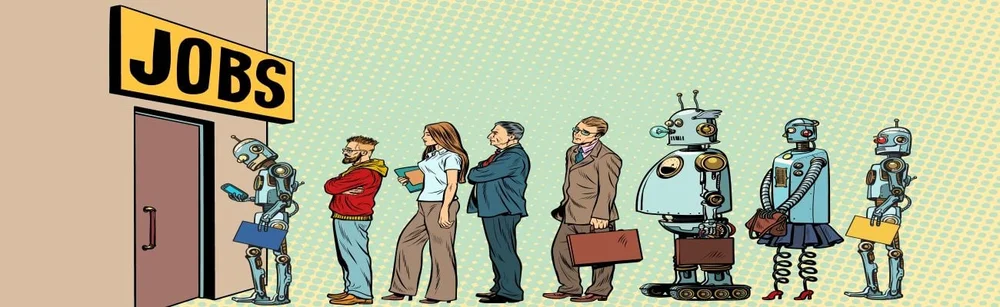
The reason? AI can now do a lot of the grunt work that companies used to hire junior developers to do. Writing boilerplate code, fixing basic bugs, building simple features, documentation — a senior engineer with AI tools can handle what used to require a whole junior dev. So companies did the math and a lot of them just… stopped hiring as many juniors.
37% of managers literally said they’d rather use AI than hire a new grad. That’s not a hot take from some influencer. That’s from a survey.
But Here’s Where It Gets Complicated
If you stopped reading here, you’d think “okay, don’t do CS, got it.” But the last few months have been genuinely weird.
IBM — one of the biggest tech companies on the planet — just announced they’re tripling their entry-level Gen Z hiring. Not cutting. Tripling. Their CEO said the exact opposite of what everyone expected. Cognizant is doing the same thing. Their CEO said he can now take a new grad and give them AI tools that let them “punch above their weight” — basically doing work that used to require years of experience.
McKinsey is hiring 12% more people in 2026. And Forrester Research found that over half of companies that laid people off “for AI” ended up regretting it. Turns out AI isn’t actually ready to replace humans in a lot of cases, and companies that bet it was are now scrambling to rehire.
So what’s happening? The industry is splitting in two. Some companies are cutting junior roles because they think AI replaces them. Other companies are increasing junior hiring because they realized AI doesn’t replace people — it makes people better, which means you want more humans who know how to use these tools, not fewer.
Nobody knows which model wins yet. Anyone who says they do is either lying or selling a course.
So Should You Major in CS or Not?
Honest answer: probably yes, but not for the reasons people told you three years ago.
The old pitch was: major in CS → learn to code → get a cushy job at Google → make $150K at 22. That specific pipeline is getting narrow. If that’s the only reason you’re considering CS, you should know the odds are different now.
But here’s what the doom-and-gloom crowd misses:
CS grads still have the highest average starting salary of any major — around $89K for the class of 2024, compared to $66K average across all fields. Even in a “bad” market, CS pays more at entry level than most other degrees pay after five years.
The jobs didn’t disappear — they changed. While basic programmer roles dropped, software developer positions (more design-focused, higher-level thinking) barely budged. Infosec roles grew in double digits. AI engineering is exploding. The Bureau of Labor Statistics still projects 22% growth in computer and IT occupations through 2033.
Every industry needs people who understand this stuff. It’s not just “work at a tech company” anymore. Healthcare, finance, education, government, entertainment — they all need people who can build and work with AI systems. The career paths are wider than they’ve ever been, even if the one specific path (FAANG entry-level SWE) got harder.
The real question isn’t “should I major in CS.” It’s “should I major in CS the way people did in 2019.” And the answer to that is no.
What Changed About How You Need to Approach It
Here’s the thing nobody’s really saying clearly: a CS degree is more valuable now than it was five years ago, but only if you actually use it to learn. That sounds obvious, but it’s not.
The old model was: go to class, do the assignments, get decent grades, graduate, get hired, learn on the job. The degree was basically a credential that got you in the door, and you learned the real stuff at work.
That model is breaking because companies are less willing to invest in training juniors when AI can handle the basic stuff. So you need to show up already knowing more than the old version of “entry level.”
What that means practically:
Actually understand the fundamentals. Not “can pass a test on data structures.” Actually understand them — why algorithms work, how systems are designed, what happens under the hood. This is the stuff AI can’t fake for you, and it’s what separates someone who can work with AI tools from someone who’s just… using them and hoping for the best.
Don’t just learn to code. Learn to build things. There’s a huge difference between “completed coursework” and “built a project that does something real.” Every hiring manager, every article, every piece of data says the same thing: demonstrated skills and real projects matter more than GPA now. If your whole resume is classes and a capstone, you look like everyone else.
Get comfortable with AI tools early. Not “use ChatGPT to write your essays.” Get good at using AI as part of a real workflow — knowing when it’s wrong, how to prompt it for complex problems, where it falls apart. Companies like IBM are specifically hiring new grads because Gen Z has the highest AI readiness of any generation. But “readiness” means knowing how to work with it effectively, not just knowing it exists.
Look beyond the classic SWE role. Cybersecurity, AI/ML engineering, data science, computational biology, tech policy — the branches off a CS degree are wider than ever. The students who do well won’t be the ones laser-focused on one job title. They’ll be the ones who understand CS deeply enough to apply it wherever the opportunities go.
The Part Nobody Wants to Say Out Loud
Here’s the uncomfortable truth that matters if you’re making this decision right now:
The students who spent their college years having AI do their work for them are about to get absolutely exposed. In a tighter job market, technical interviews are going to be ruthless. There’s a massive difference between “I understand how this algorithm works and can explain my thinking” and “I can prompt an AI to give me the right answer.” One of those people gets the offer. The other one can’t explain their own code when the interviewer asks follow-up questions.
A CS degree from 2026–2030 is going to be worth more than one from 2018, not less — because the people who actually learned the material will be rarer and more valuable than ever. The bar went up. But if you clear it, you have more leverage than any previous generation of CS grads, because you’re the first generation that actually knows how to work with AI natively.
That’s the real opportunity here. Not “get a cushy FAANG job.” It’s: learn this stuff deeply, combine it with AI tools, and you can genuinely do things that weren’t possible for a new grad five years ago. The companies that are tripling their hiring right now? That’s exactly who they’re looking for.
So Here’s What I’d Actually Tell a High Schooler Right Now
If you genuinely like problem-solving, building things, and understanding how systems work — CS is still one of the strongest foundations you can choose. The career paths are wider, the starting salaries are higher, and the demand for people who actually understand this stuff (not just people who can prompt an AI) is going up, not down.
If you were only considering CS because someone told you it’s a guaranteed path to a six-figure job with no effort — that was never really true, and it’s definitely not true now. The guaranteed part is gone. The opportunity is still there, but it requires you to actually engage with the material.
And if you’re already in school and wondering whether you’re wasting your time — you’re not, as long as you’re really learning. Use the tools available to you, but use them to understand things better, not to skip understanding entirely. That’s what’s going to matter.
Whether you’re studying CS or anything else, if you want an AI tool that actually forces you to think through problems instead of handing you answers, Grassroot was built for exactly that. Not because AI tutoring is trendy, but because the difference between “used AI to learn” and “used AI to avoid learning” is about to be the thing that determines entire career trajectories.
Sources
- SignalFire / CNBC. “AI Is Not Just Ending Entry-Level Jobs.” September 2025.
- IEEE Spectrum. “AI Shifts Expectations for Entry Level Jobs.” December 2025.
- Rest of World. “AI is wiping out entry-level tech jobs, leaving graduates stranded.” December 2025.
- Fortune. “IBM is tripling the number of Gen Z entry-level jobs.” February 2026.
- Forrester Research / HR Executive. “The AI layoff trap: Why half will be quietly rehired.” December 2025.
- NACE Job Outlook 2026 / Lantern College Counseling. CS starting salary data. October 2025.
- The Renegade Coder. “Computer Science Career Advice in 2026.” December 2025.
- World Economic Forum. “Is AI closing the door on entry-level job opportunities?” April 2025.