A New Framework for a New Career Paradigm
Modern schools have long operated under a familiar assumption: academic learning happens first, and career skills come down the line. Pupils study math, science, humanities, and social sciences in classrooms, and only years afterward do those subjects translate into the workforce. There's a reason why "When will we ever use this?" has been a decades-long complaint of math students around the world.
But those students may have been onto something because the separation between school and career is beginning to disappear.
Last week, the U.S. Department of Labor announced a new initiative aimed at expanding the development of an AI workforce through registered apprenticeships and training programs across the country. The announcement reflects something more than just a single policy update. It signals a growing national consensus: AI literacy is no longer a specialized skill, but rather a foundational preparation for the future of work.
For parents, educators, and learners, the question is no longer whether AI will shape careers. Instead, the question is whether students are gaining the skills needed to understand and work alongside the technology early enough.
Shifting from Certificates and Degrees to Skills and Application
The Department of Labor's release details a focus on expanding pathways into AI-related careers through apprenticeship models, employer partnerships, and workforce training programs. Historically, apprenticeships were associated with trades such as construction or manufacturing. Now, they are being increasingly positioned as entry points into emerging technology fields.
This matters because it reflects a broader shift in how institutions are thinking about preparation for work. Employers increasingly value demonstrated skills such as problem-solving, technical fluency, and adaptability in conjunction with the kind of academic credentials that were previously seen as paramount in hiring.
AI has only accelerated this shift. Unlike many past technologies, AI tools are accessible immediately; students are already encountering them in classrooms, homework assignments, and daily life. Workforce policy is now catching up to a reality that learners are already experiencing.
The implication is subtle but important. Career readiness is moving earlier into the learning journey, which requires students to adapt swiftly and dramatically.
AI Literacy: Not Just Another Tech Skill
Every generation has faced new technologies they had to study in order to succeed in the workforce. Computers began to enter classrooms in the 1980s. The Internet reshaped research and communication in the 1990s and 2000s. And smartphones changed how information is accessed entirely.
AI is another groundbreaking technology, but it differs from the others in one key way. AI does not simply deliver information; it participates in thinking processes.
Learners now interact with systems that can explain concepts, generate examples, simulate scenarios, and adapt responses dynamically. This has changed what it means to be "literate." Understanding AI involves more than knowing how to "use" software. It requires learning how to:
- Ask effective questions
- Critically evaluate generated information
- Recognize limitations and bias of models
- Apply tools to explore ideas rather than shortcut understanding
The Department of Labor's emphasis on AI workforce preparation acknowledges that these competencies are becoming baseline expectations across industries, not just in technology roles alone. This is why the Department's literacy framework encourages a skillset that extends across functions, from theoretical understanding to responsible use.
The Convergence of Education and Workforce
One of the most important signals in the DOL's announcement is not technological, but rather, structural.
Workforce development and education policy have begun to overlap more directly. Apprenticeships tied to AI skills suggest a future where learning and working happen simultaneously rather than the former serving as a prerequisite for the latter.
For learners, this means that preparation cannot wait until college or professional training programs. Foundational familiarity with AI concepts increasingly starts during middle school and high school, when students are still developing habits of learning and problem solving.
Parents are already watching this transition play out. Students encounter AI tools informally, often without guidance on how to use them productively. Policy initiatives such as this one from the DOL aim to formalize pathways, but they also highlight an enormous gap: traditional classrooms are not moving at the same pace as technological change.
Interaction, Not Memorization
AI's educational impact is strongest when it supports understanding rather than replacing effort, and this understanding is core to our mission at Grassroot.
Research in learning science has consistently demonstrated that students retain knowledge more effectively when they actively engage with the material they are studying, which includes testing ideas, receiving feedback, and visualizing concepts as they unfold. AI systems can enable this kind of interaction at a scale previously impossible.
Instead of passively consuming explanations, learners can explore multiple approaches to a problem, see concepts represented visually, and iterate through practice in real time.
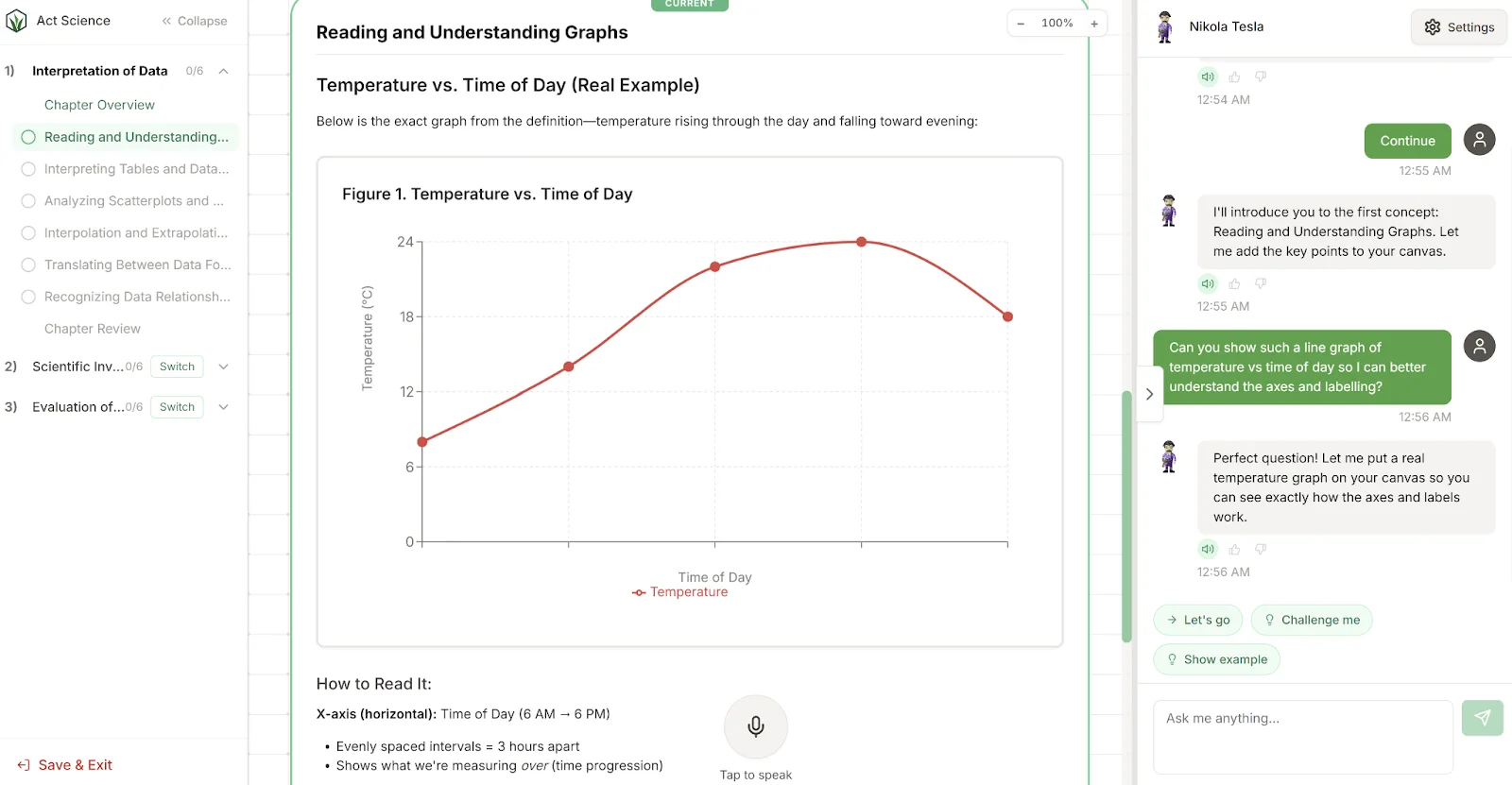
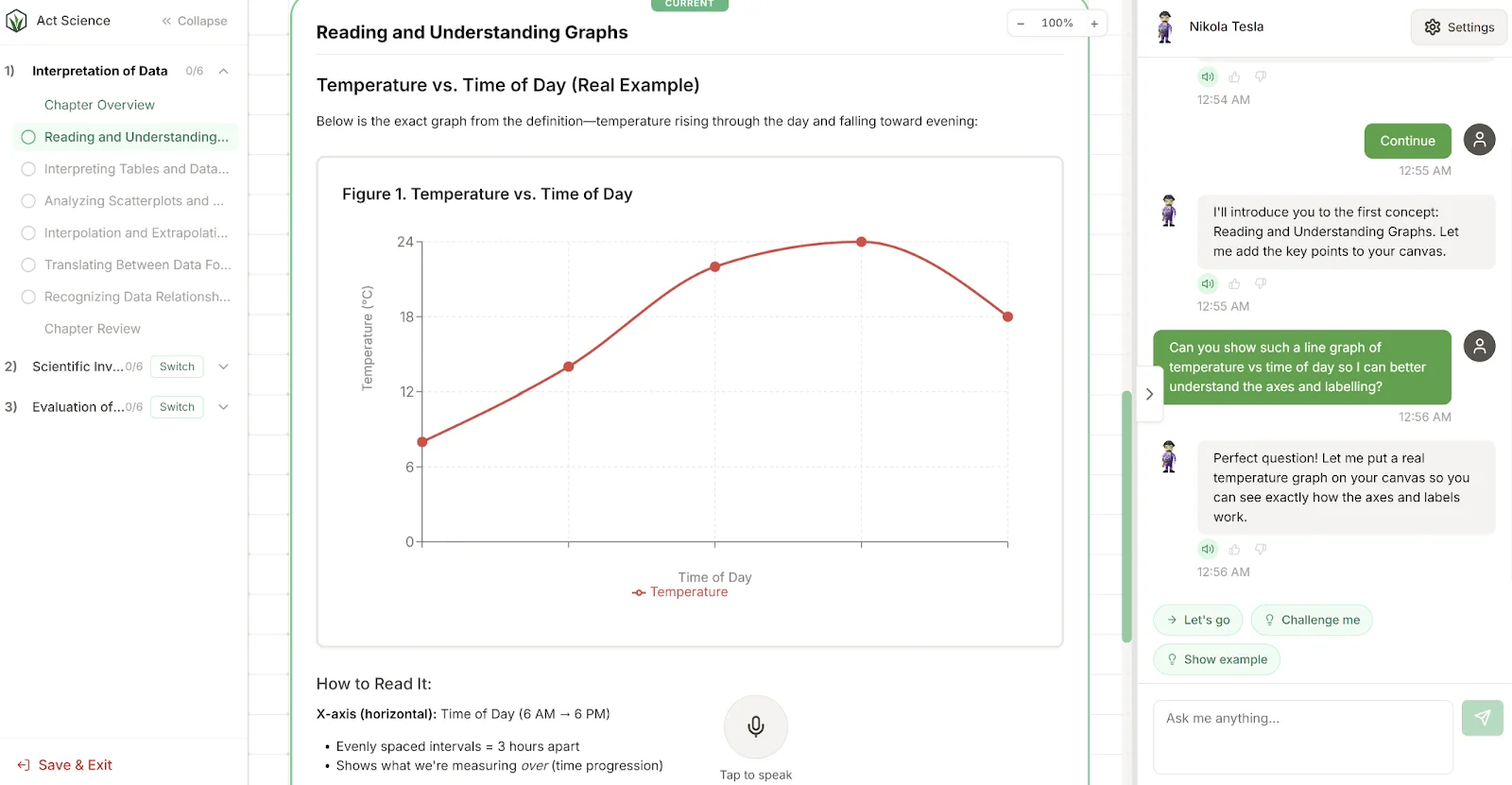
The kind of guided interaction available at Grassroot exactly mirrors how skills develop in apprenticeships themselves: through doing, adjusting, and refining understanding over time.
In that sense, the DOL's announcement does not simply address workforce training. It reinforces a broader educational insight: learning environments that emphasize active practice and feedback better prepare students for evolving careers.
What This Means for Learners Today
Policy announcements often feel distant from our day-to-day lives, but their long-term effects shape expectations for the next generation. Nowhere is that more apparent than in the realm of education.
If AI literacy is becoming foundational, learners can benefit from developing three key capabilities early:
- Familiarity working alongside AI tools rather than avoiding them
- Conceptual understanding of subjects strong enough to critically evaluate the quality of AI outputs
- Application-oriented learning habits that emphasize reasoning over memorization
Students who build these skills are not simply scaling up for technology careers; they are preparing for a world in which nearly every field integrates AI in some form.
The Department of Labor's initiative signals that institutions are beginning to recognize this reality. The pace of adaptation in education, however, often depends on the tools learners have access to today.
Preparing for the Skills That Come Next
As AI reshapes how people work, it continues to reshape how people learn. The most effective preparation does not come from avoiding new tools or relying on them blindly, but from learning how to use them critically and with intention.
Grassroot is designed around this idea. We're proud of our commitment to help learners practice concepts interactively, visualize ideas clearly, and engage with material in ways that build lasting understanding rather than short-term answers. This is because we know that as workforce initiatives expand opportunities in AI-driven fields, the advantage increasingly belongs to learners who develop familiarity and confidence early.
The future of work is arriving faster than traditional educational timelines anticipate, but exploring new ways to learn today can help learners meet that future, prepared.
Start learning with Grassroot today, and see how interactive, AI-supported learning can help turn curiosity into understanding.