Hey, it’s Marie.
A war broke out. A big one. They’re calling it the Great War, which is a very generous name for something this terrible. France is sending young men to the front by the hundreds of thousands and they’re coming back broken — if they come back at all.
I wanted to help. I’m not a doctor and I’m not a soldier but I know one thing — when a wounded man is lying on a battlefield with a bullet inside him, surgeons have to find it before they can remove it. Right now they’re guessing. They cut men open and search with their hands. Many die on the table not from the wound but from the surgery.
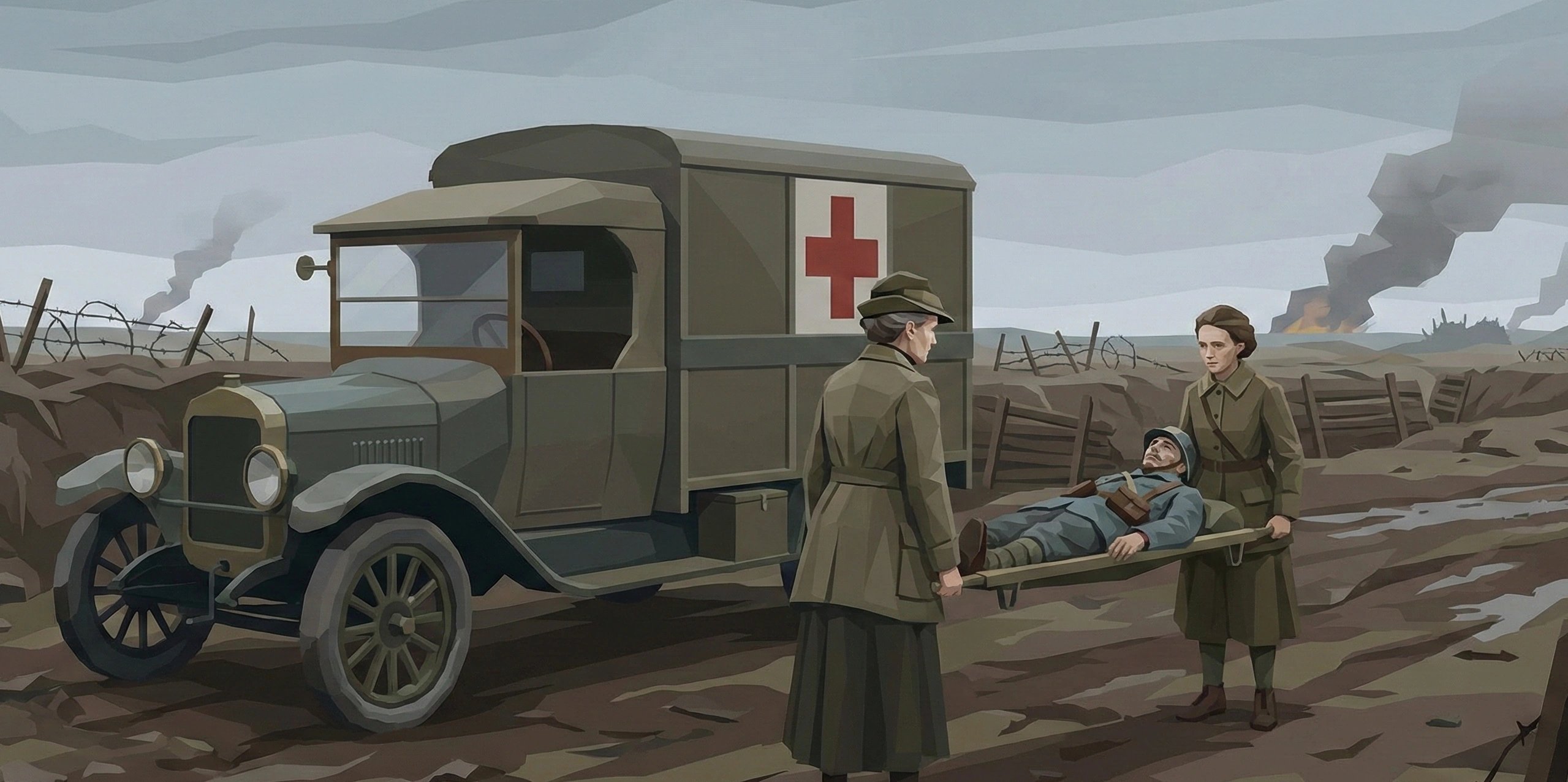
X-rays can show exactly where a bullet is sitting inside a body. The technology exists, but X-ray machines are enormous and they’re sitting in hospitals in Paris while wounded soldiers are dying in muddy fields hundreds of miles away. So I built mobile ones. I took X-ray equipment, fit it into vehicles, and created moving radiological units that drive directly to the front lines. The army didn’t ask me to do this. Nobody funded it. I just did it because someone needed to and no one else was going to.
One small problem — I didn’t know how to drive. So I learned. In the middle of a war. I’m a 47-year-old Polish woman who’s spent her adult life in laboratories and I taught myself to operate a vehicle so I could haul X-ray equipment into active combat zones. My daughter Irène, seventeen, came with me. I couldn’t talk her out of it. She’s my daughter, so I wasn’t surprised.
The things I’ve seen at the front I won’t describe in detail. I’ll tell you that the first time I X-rayed a wounded soldier and showed the surgeon exactly where the shrapnel was, he looked at me like I’d performed a miracle. It wasn’t a miracle. It was physics. But that man lived because we got there in time.
I’ve trained over 150 women to operate the equipment. We’ve treated over a million wounded soldiers. A million. The army calls my vehicles “petites Curies” — little Curies. I pretend to find this embarrassing but I like it very much.
I’m not well, though.
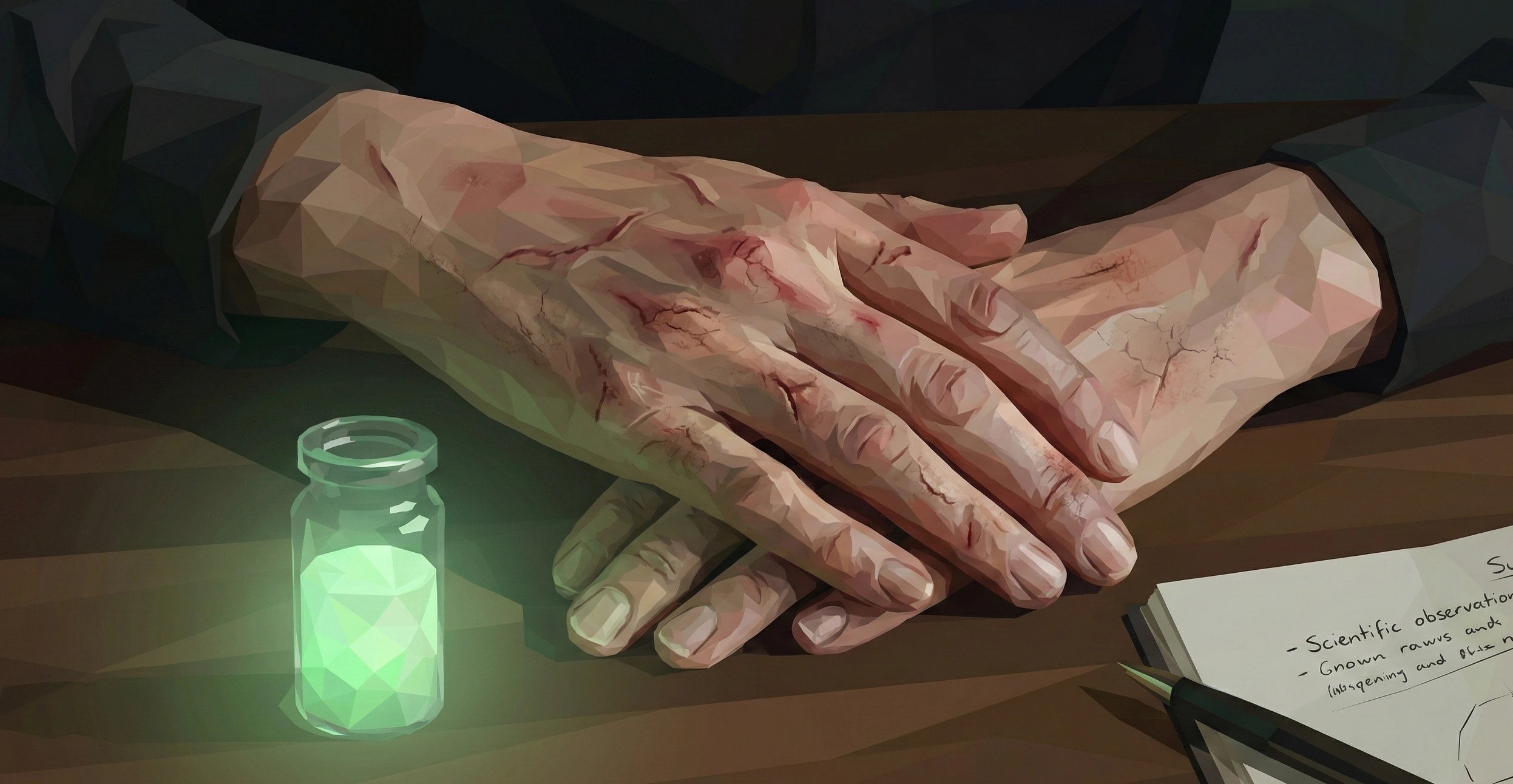
My hands — the ones that spent years grinding pitchblende, handling radium with no gloves, carrying radioactive material in my coat pockets — they’re damaged. My fingers are scarred and numb. My vision’s getting worse. I’m tired in a way that sleep doesn’t fix. I’ve spent my entire career surrounded by radiation. In the early days we didn’t understand what it could do. I used to carry glowing vials of radium in my pockets because I thought they were beautiful. Pierre and I would sit in our shed at night and watch our samples glow in the dark. It was magical.
I think it was also killing us.
Every single thing I’ve accomplished — the discoveries, the prizes, the war, the million soldiers — all of it cost something. Poland tried to stop me from learning. Paris tried to starve me out. The Academy rejected me for being a woman. The newspapers tried to destroy me for being human. And now the very elements I discovered may be taking my body apart from the inside.
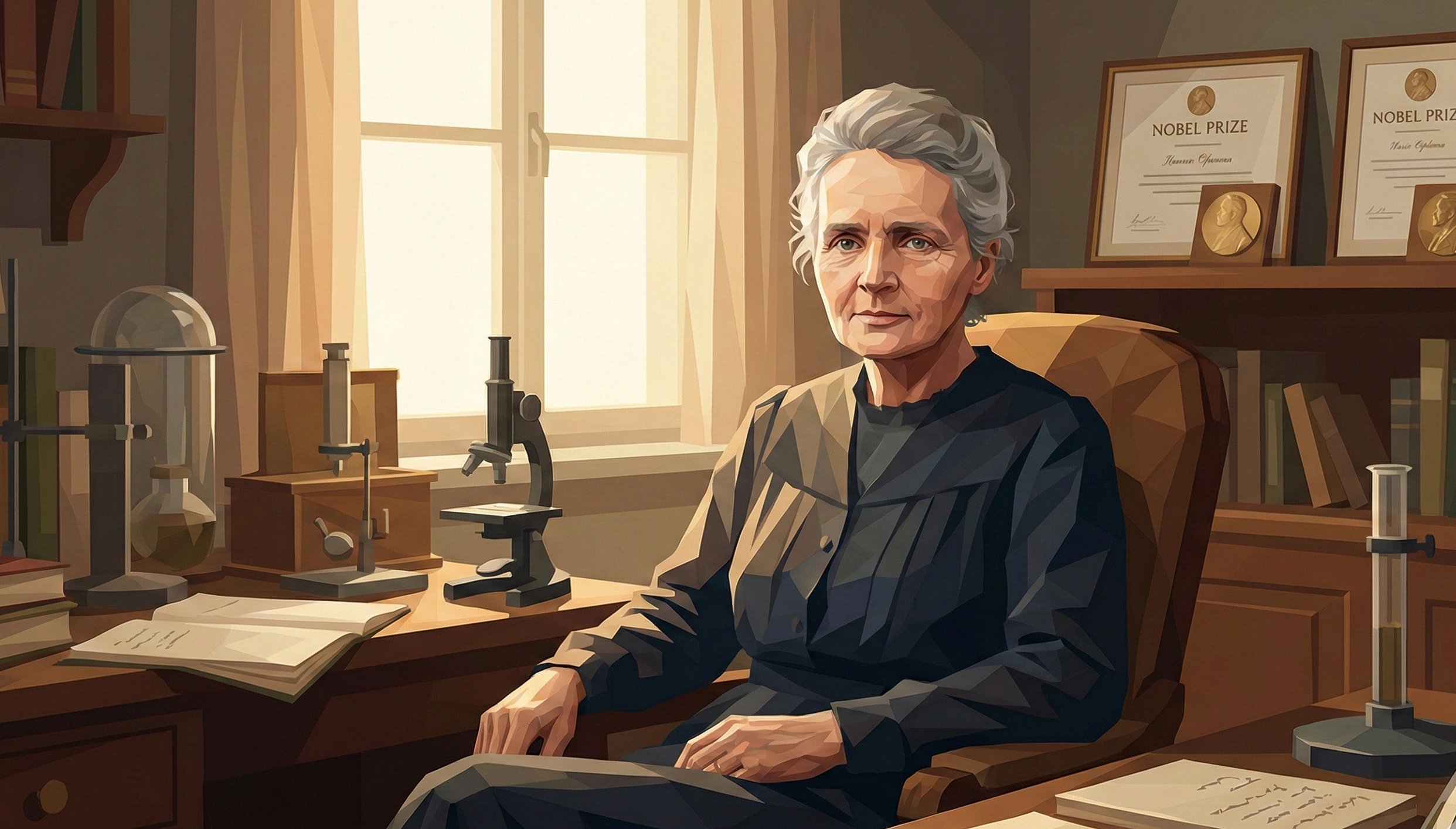
I’d do all of it again. Every freezing night in that sixth-floor apartment. Every hour in that leaking shed. Every day on the battlefield. All of it. Because I got to do what almost nobody gets to do — I got to pull something new out of the earth that had been hidden since the beginning of time. I got to hold it in my hands and say this exists because I found it.
That’s worth everything it cost me.
I’m tired these days. But I’m still working. I’ll always be working. If you take one thing from these letters, let it be this — don’t let anyone tell you what you’re allowed to pursue. Not a government. Not an institution. Not a mob. The knowledge you build in your mind is yours forever. It’s the only thing nobody ever managed to take from me.
Take care of yourself. And eat properly. I mean it. I’ve fainted in enough libraries for the both of us.
— Marie